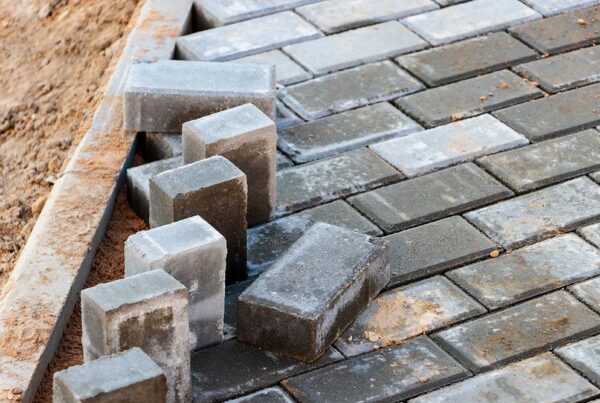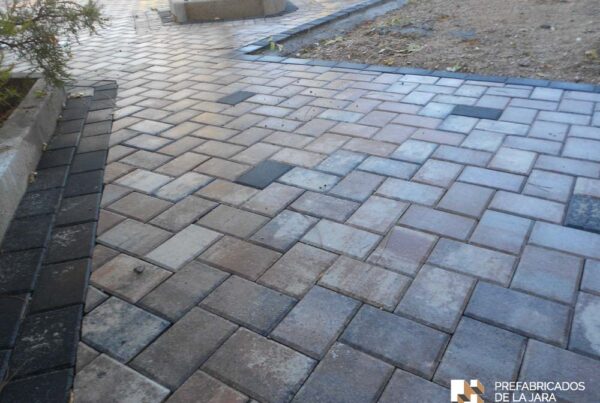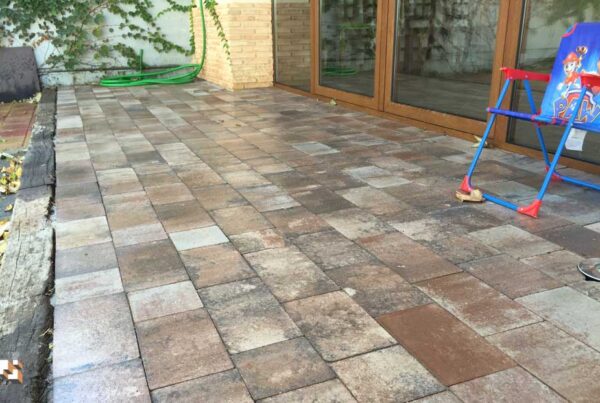

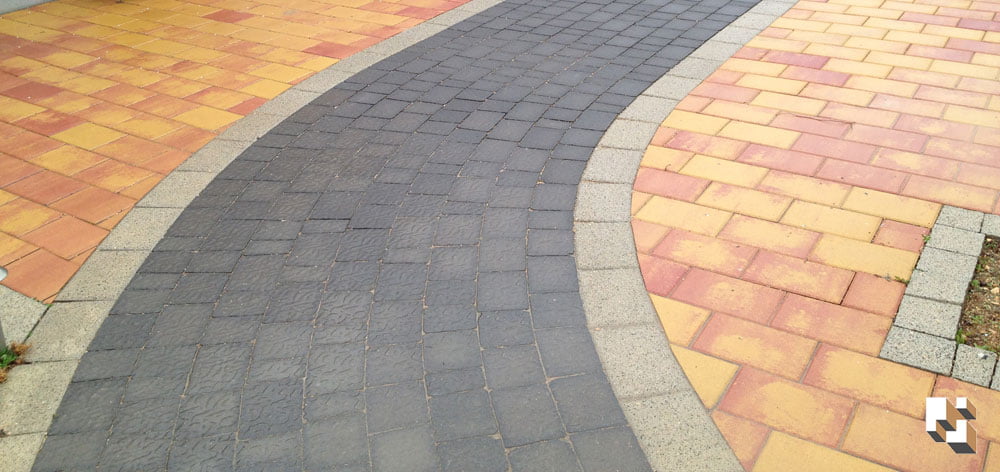
Let’s talk about the most common testing methods for concrete paving stones. The use of concrete paving stones is becoming increasingly common, especially in the surfacing of public roads, both pedestrian and vehicular, thanks to their durability conditions, as they are one of the most wear-resistant materials. In addition, this is added to its versatility, being suitable for both landscaped areas with decorative paving stones and for heavier traffic. Even so, certain characteristics must be demanded so that its use and service life are adequate. This is achieved with certain paving stone testing methods.
Next, from Cleannox, concrete paving stones for Albacete and Madrid, we will talk about three of the most common for concrete paving stones.
Testing methods for concrete paving stones
Water absorption method
Determining the capillary absorption of concrete is essential to ensure and guarantee the durability of the concrete pavement. This type of paving stone test is based on measuring water absorption by comparing the difference in mass when dry and when wet. That is, defining the rate of absorption or tendency of the porous material to absorb and transmit water.
Sample
The method requires 3 whole pieces, without dust or projections. If it is very heavy (more than 5 kg), it can be cut into two equal parts, maintaining the thickness of the paving stone.
Procedure
The paving stones are placed in a container where they are completely submerged, separated and in a vertical position. Next, they are weighed twice, at the beginning and after 24 hours, and there should not be a difference greater than 0.1% in their masses (difference in wet mass). They will be submerged for at least 3 days. For drying, they will be placed in an oven, also in a vertical position, which will be at 105 ºC. The dry mass will be obtained after cooling. After that, the dry and wet masses will be compared.
From the results obtained, we can draw conclusions about the level of water resistance and its behavior and durability over time.
Breaking strength
These testing methods are carried out by applying a compressive force with a machine with two non-deformable steel supports, which must be longer than the section to be tested and with a contact surface of approximately 75 mm.
Sample
Three whole paving stones must be tested, without any incrustation or rim. If the face is not flat or smooth (it is rough, textured or curved), it must be prepared by mechanical grinding, trying to remove as little material as possible.
Procedure
They must be previously submerged in water for one day, after which the test load will be applied with two compression pieces (made of neoprene or wood conglomerate) whose width will be 15 mm, their thickness 4mm and their length must exceed that of the fracture plane that has been foreseen by 10 mm. The breaking load will be the average between that obtained on the face and on the back.
Abrasion wear resistance
These paving stone testing methods are to measure the abrasion resistance through the erosion that occurs due to friction on the face of the paving stone. This is subjected to wear with an abrasive material or by friction with a steel disc.
Sample
Three paving stones will be used, either whole or a piece cut from each one with part of the face and with dimensions of 100 mm x 70 mm as a minimum. The surface to be tested will be the face, which must be completely flat, clean and dry.
Procedure
Before starting, the equipment must be calibrated. Once prepared, the hopper is filled with a dry abrasive material and the specimen is placed in the carriage. The disc will make 75 turns and it is important that the flow of abrasive material is regular. The length of the mark left by the test must be measured and then, depending on the class of paving stone, see if it is within the limits.
These are the most common testing methods to test the concrete paving stones that will allow us to check the usefulness, durability and quality of the decorative paving stones or for the road traffic that we need. The tests are the best decision to check their properties.
The Spanish Instruction of Structural Concrete, EHE 08, includes all the testing methods and quality control methods necessary to corroborate that the structures comply with safety criteria.
Cleannox, concrete of proven quality
At Cleannox we are a company specialized in paving stones for pavements for Albacete and Madrid. With exclusive dedication to its manufacture for 25 years. And with more than 100 years of experience in the manufacture of elements and materials for construction. Ask about our paving stone products, we offer you a wide catalog.

Cleannox, adoquines de hormigón para pavimentos decorativos. Adoquines ecológicos con efecto fotocatalítico.