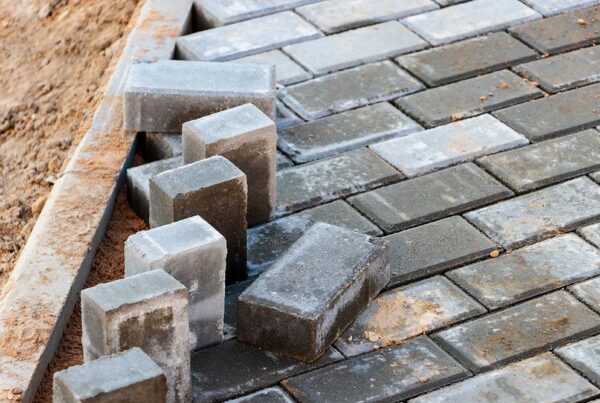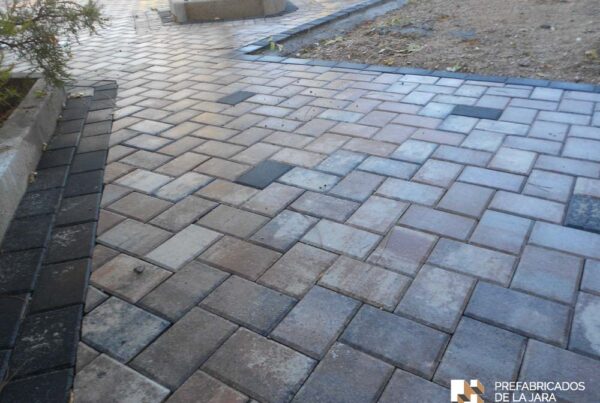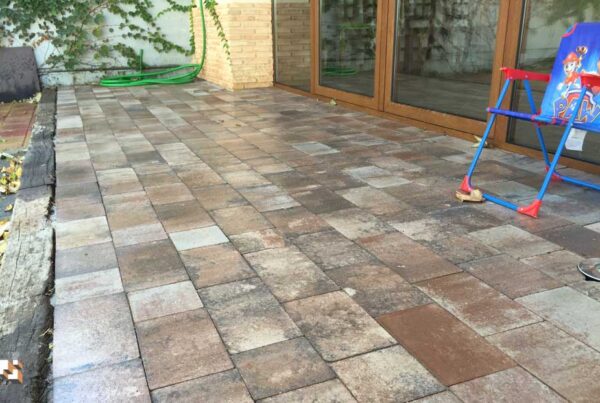

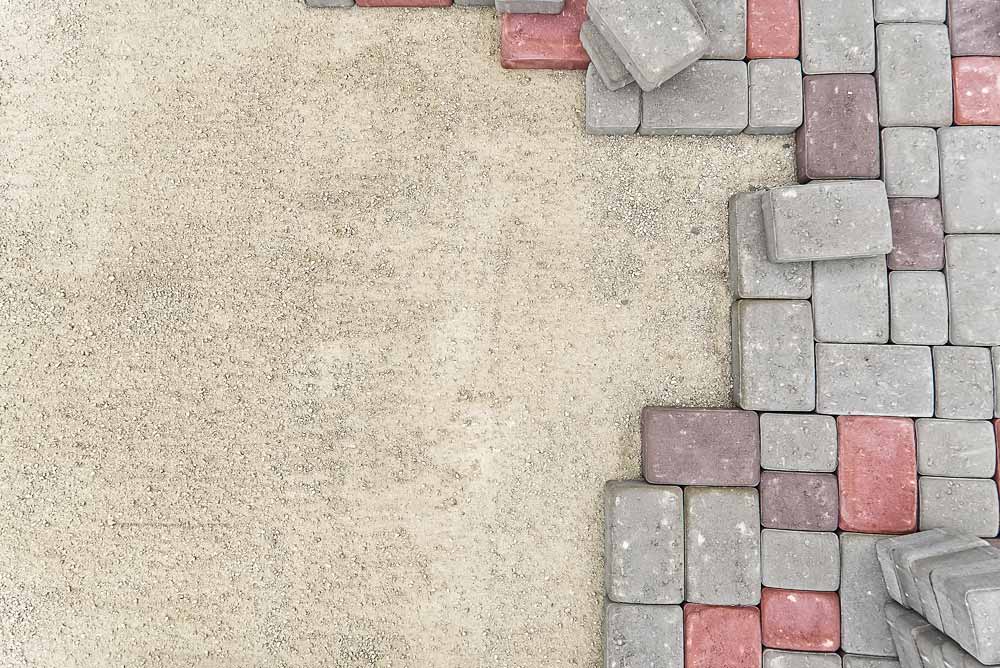
On more than one occasion, we have discussed the importance of carrying out a proper paver installation to ensure that the pavement is durable and lasts over time. Concrete paving consists of a series of layers prior to the placement of the pavers. One of these layers prior to the placement of the pavers is called the sand bed, on which the paving will rest.
This sandy bed performs several important functions. First, it supports and transmits the weight applied to its surface (for example, vehicles). This prevents the pavers from being displaced or even sinking. In addition, the sand bed acts as a leveler, mitigating possible differences in thickness between the different pavers and ensuring that the surface remains uniform. Another function of the sand bed is to facilitate water drainage, preventing the accumulation of moisture that would seriously damage the pavement over time.
In today’s post, we are going to tell you in more detail about the importance of the sand bed in paver installation and how its correct application can improve the durability and appearance of your pavement.
What is the sand bed?
On more than one occasion, we have discussed the importance of carrying out a proper paver installation to ensure that the pavement is durable and withstands the test of time. Concrete paving consists of a series of layers prior to the placement of pavers, each with a specific function to ensure the consistency and durability of the pavement. One of these essential layers is the sand bed, on which the paving will rest.
>> If you are interested in learning more about concrete pavers in pedestrian pavements, you can view our blog post that discusses this by clicking.
What should the sand be like?
We have already mentioned above that the sand bed is a sandy bed that supports and transfers weight and that one of its main functions is to act as a leveler to ensure that the surface remains flat, uniform and aesthetic.
We have also mentioned that one of its most important functions is to act as a water drain. For this function, the grains of sand must have a size between 2 and 6 millimeters. This substrate significantly influences the operability of the paving. The initial thickness of this sand bed is recommended to be between 3 and 5 centimeters. Over time and the weight it will support, this thickness will be reduced, but should never be less than 2 centimeters.
It has been found that angular grain sands perform better than round grain sands. This is because they provide greater stability and compaction. This difference in the grains affects the resistance of the pavement to loads and leveling over the years.
The sand that makes up this base must be a clean and properly washed sand. Both natural and synthetic sand are valid, but in both cases there must not be an amount of clay greater than 3%. The presence of salts that may be harmful and other foreign matter must also be avoided. In this way, this layer will remain stable and the absorption of water will be avoided. The sand must be completely dry when spreading it to form this layer.
Can other elements be added to the sand bed?
Keep in mind that other elements such as cement, mortar or lime should never be added, as the sealing system may fail. Likewise, the use of calcareous sands is not recommended, due to their excessive dust content, in which case the paving surface could be tarnished.
Although the constitution of this substrate only with sand is recommended, in certain circumstances it may be advisable to add some other element that helps to compact the base and reinforce the sealing capacity. In areas where there is a steep slope, greater than 9% of unevenness, and where heavy rains are frequent, it is preferable that this sandy bed be reinforced. You can learn more about the importance of compaction in paver installation here.
How does the sand bed influence paving?
The importance of the sand bed influences numerous aspects related to paving, both in its functional component and in its aesthetics. For example, it determines the homogeneity of the paving surface, both in its longitudinal and transverse aspects. This regularity immediately influences the comfort of users, since it avoids abrupt movements in vehicles.
The sand bed also influences the evacuation of water on the surface quickly, which prevents the formation of puddles and reduces the risk of accidents due to slipping. Effective drainage will also protect the integrity of the pavement by preventing the accumulation of moisture and, therefore, humidity. If this happened and the pavement was not drained well, over time it could suffer damage such as weakening of the base and the pavers themselves.
Another aspect to highlight is the influence of the sand bed on the noise produced by the rolling of vehicles. If the pavement is well leveled and compact, the noise will be reduced and, therefore, the quality of life in residential and urban areas will be improved.
Consequently, when a pavement is to be constructed with concrete pavers, the sand bed plays a very important role in the performance that the paving will offer. Therefore, at Cleannox, we offer the best services and products in concrete pavers for pavements. We provide quality decorative pavements in Albacete and Madrid. We work throughout the region of Castilla-La Mancha, offering concrete pavements for Cuenca, Guadalajara, Ciudad Real, and Toledo. Please contact us and we will help you design and build the ideal pavement for your needs.

Cleannox, adoquines de hormigón para pavimentos decorativos. Adoquines ecológicos con efecto fotocatalítico.