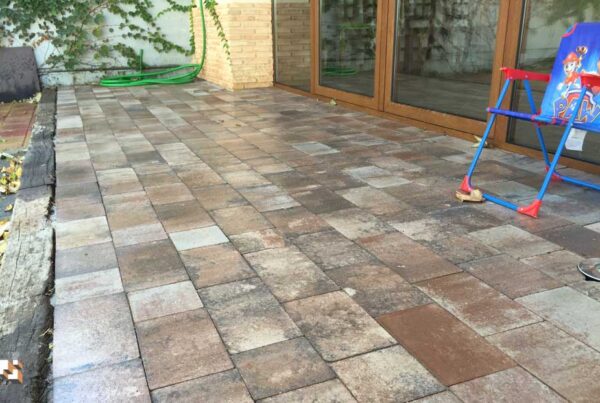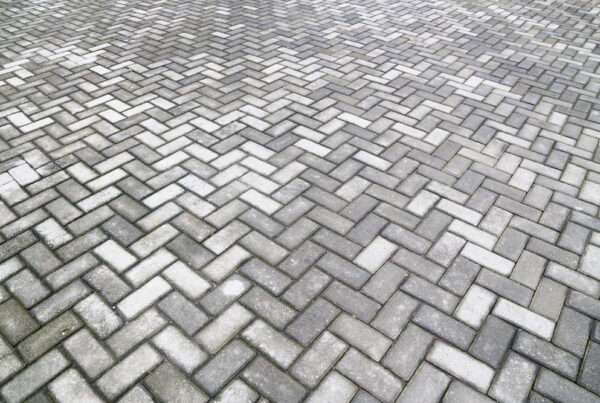

The flexible and rigid pavements are structures for the construction of horizontal architecture that are used as a base on the ground. In civil works, it constitutes the subgrade and the layer of leveled material on the ground. The different types of pavements fulfill the function of increasing the resistance of the lower layer of soil and facilitating the transit of vehicles or people.
Depending on the nature of the pavement, we can find elaborations in rocky materials, with concrete or asphalt mixtures derived from petroleum. Another classification based on its mechanical behavior would be to divide the pavements according to the concept of rigid or flexible.
From Cleannox we want to talk a little more about the difference between these types of flexible and rigid pavements.
Difference between these types of pavements
Flexible pavements tend to deform partially as we apply a load. Then, when we remove it, they recover their original state. This occurs because they transmit the loads through their thin layers of asphalt, without suffering permanent deformation. We have a similar example when squeezing a rubber eraser: while we generate pressure it deforms, but when the force ceases it recovers its original shape. That is why paving stones are the most suitable option for pavements with high traffic due to their high capacity to absorb impact, loads and deformations. Although also for pedestrian traffic.
For their part, rigid pavements are formed of a concrete slab supported on a base of ground. These transmit the stresses directly to the ground and constitute very resistant slabs. When we have road traffic on its surface, the rigid pavement absorbs most of the stresses exerted by the wheels of vehicles against the concrete. Remember that for the case of flexible pavement the stress is transmitted to the lower layers.
Rigid and flexible pavements. Which option is more recommended?
It is logical that when searching for constructive solutions the concern arises: What type of pavement has better results? The truth is that there is no generic answer to define which is better, whether rigid or flexible pavement.
The choice of a good pavement depends on the needs and characteristics of the work in question. The different variables must be evaluated, such as the use, maintenance and performance of the same. In many occasions, there is a tendency to choose the most economical solution without attending to the specific requirements and needs of the work. Rigid pavements have a higher initial cost but lower maintenance cost than asphalt ones.
As for rigid pavements, their deterioration is usually less than that of asphalt pavements due to their own physical nature. The thicknesses to generate a concrete slab are greater compared to the asphalt layers, which gives it a certain advantage.
Which option is more recommended?
It depends on the project: if you need maximum resistance and minimum deformation: rigid pavement. If you are looking for flexibility, ease of repair and a more friendly finish with the environment: flexible pavements. In mixed urban environments (pedestrian and light traffic), prefabricated paving stones combine the best of both systems. Opting for flexible or rigid pavements will depend on the needs of each project.
Other notable differences
Having known the characteristics of one and another pavement, such as its durability, resistance, etc. it is also important to know other aspects to take into account. Rigid pavements present less deformation than flexible ones, they absorb the stress while flexible ones transmit it to the ground. The former are more resistant to fire and present less friction than the latter.
Rigid pavements offer a lower drainage capacity but at the same time a better performance against water.
Both types of pavements can suffer deterioration. For example, in rigid pavements, longitudinal, transverse or corner cracks, as well as stepping, may appear.
In flexible pavements, they also experience cracking caused by fatigue. The so-called “ruts” can also occur, which offer worse conditions for transit and even accumulation of water, detachment of aggregates, etc.
What other types exist?
Concrete paving stones
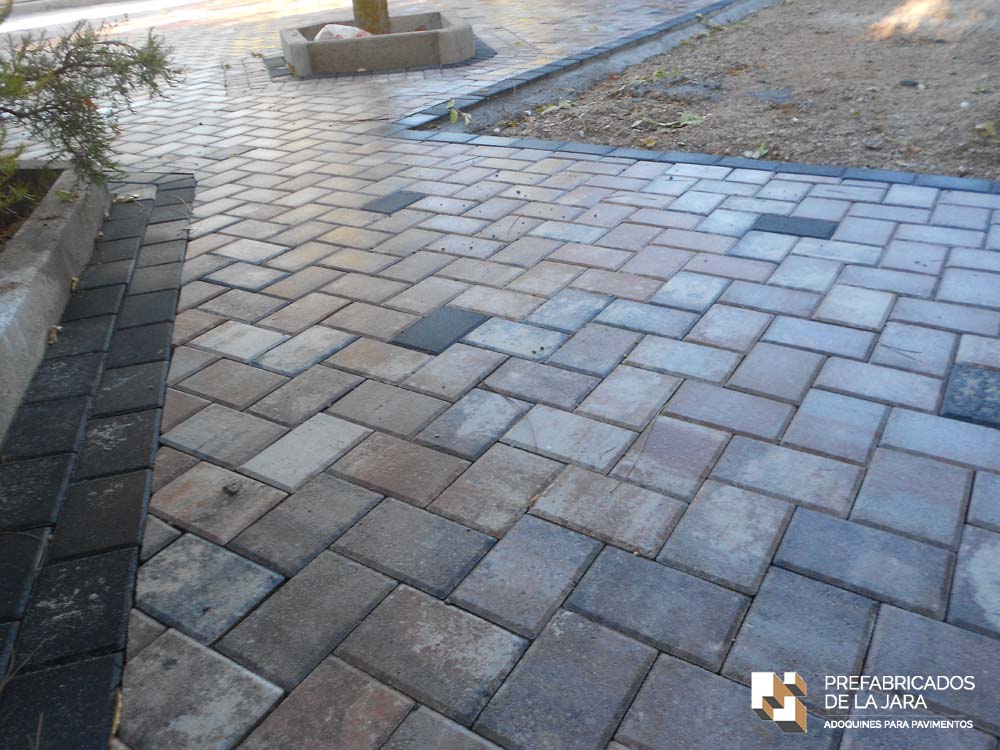
Concrete paving stones are used as decorative and functional products in paving. Prismatic-shaped elements with a great resistance and manufactured to withstand great pressures. Colorants are often used for cement such as iron oxide, chromium oxide and cobalt oxide to generate the appropriate warmth in the construction.
In our company we are specialists in precast and, especially, in concrete paving stones in Albacete and Madrid for decorative pavements. Two-layer pieces with enormous possibilities of designs and sizes.
Cobblestones
It is a pavement made of natural stone. They are usually constituted by granite, siliceous rocks or marbles carved or in the rough. The first cobblestones in history are more than a thousand years old and were made by the Carthaginian and Roman peoples.
Cement floor
It is a soil that is stabilized with cement through a dry mixture of soil with Portland cement and additives. For its correct setting, a certain amount of water is added to the mixture.
If you have any questions about this topic, you can contact us at Cleannox. We are a company with extensive experience of more than 100 years in the manufacture of materials for construction. As for the elaboration of decorative pavements we have more than 25 years of experience. Ask about our services. We will be happy to help you.
Ecological paving stones for flexible and rigid pavements
Since January 2023, all Cleannox concrete paving stone production has photocatalytic properties that guarantee the renewal and cleaning of the ambient air. A good way to combat the toxicity present in the air by particles such as nitrogen dioxide that can end up affecting people’s health in the form of asthma, lung problems, coughs, bronchitis or even tiredness, mood swings, etc.
Our commitment is total. Cleannox production, both paving stones and slabs, has decontaminating characteristics with a self-cleaning effect. We believe that innovation in pavements should not only respond to criteria of quality and design, but also to a real commitment to the environment we share.
At Cleannox we work every day to ensure that each urban planning project is an opportunity to add environmental value and move towards more sustainable and healthy cities.

Cleannox, adoquines de hormigón para pavimentos decorativos. Adoquines ecológicos con efecto fotocatalítico.