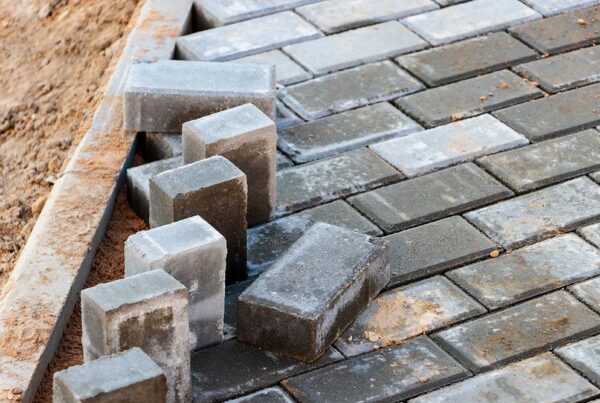

Types of bonding patterns. On different occasions, we have discussed in this blog the importance of the paver laying process to obtain the desired results at different levels of finish, design, safety, etc. A series of essential steps must be followed to guarantee proper installation. That is, excavate the material that is not suitable or stable, compact the emptied area. Fill and level with a compacted sub-base that supports pedestrian or vehicle traffic or other uses that may exist (for heavier vehicles, industrial use, etc.). Construction of the perimeter and placement of the base.
Among all these steps and the filling of joints and final compaction is the placement of the pieces, following the shape that is preferred for the pavement.
But, what types of bonding patterns exist in pavements? How can the final drawing of the concrete paver floor be made?
Types of bonding patterns for pavements
It is possible to affirm that almost any bonding pattern is possible with concrete pavers. In simple straight and aligned arrangement. Diagonally, with more complex patterns. Of course in different colors, shapes, textures and sizes that allow to give own personality to the pavement that we want to create.
From Cleannox, our company with more than 25 years of experience in concrete pavers in Albacete and Madrid, we want to list the types of paver bonding patterns that exist.
Herringbone
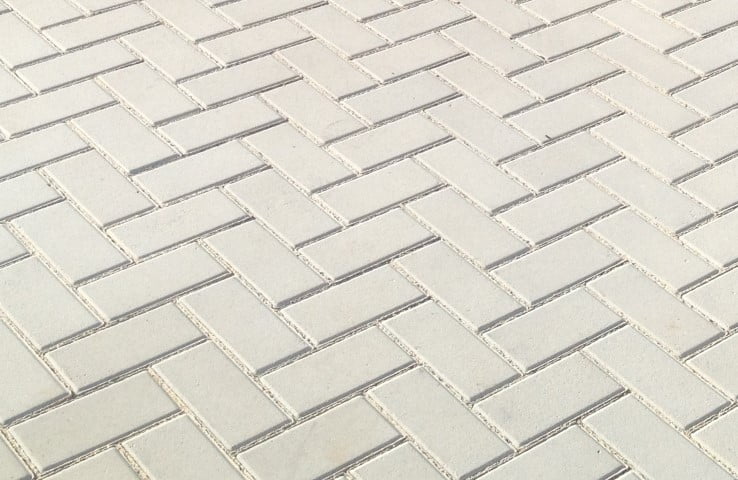
The formation in herringbone is ideal for those streets that have slopes. It is a type of bonding pattern at 45º to the direction of the road (it is also possible in the direction of the road) that is very stable, guaranteeing great adherence thanks to its uniform distribution of the pavers. It is usually used in garage entrances. It is the most suitable paver option for road traffic, and surfaces with a slope.
Its interconnected design not only effectively disperses loads, reducing the risk of pavement displacement, but also improves friction, ensuring greater traction and stability, especially in garage entrances.
In addition to its robustness, the herringbone pattern is visually attractive and allows for customizations through the use of pavers of varied colors, textures, and sizes. This makes it a versatile option to combine safety and style in urban or residential design, providing a dynamic and characterful finish to any pavement.
In rows
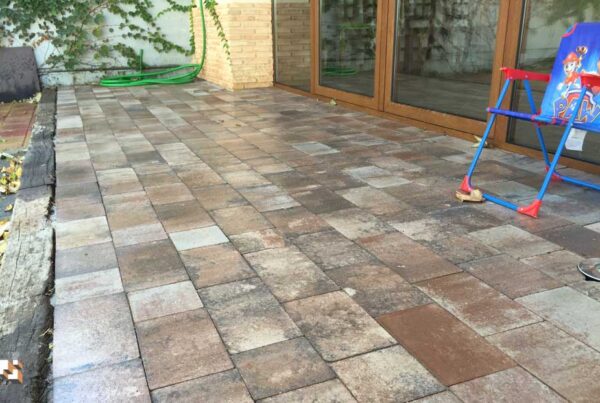
One of the most classic and common formations. To compose it, square or rectangular pavers aligned in parallel lines are used. Its placement is tremendously simple and does not require adjustment pieces, which speeds up and reduces the cost of the installation process. Its straight or offset arrangement allows for rapid assembly and an orderly appearance, ideal for large areas that require uniformity such as streets, sidewalks, and squares.
In addition, this pattern offers excellent stability and durability, suitable for high traffic areas. Although simple, it allows aesthetic variations through the combination of different colors and textures of pavers, facilitating the creation of visual patterns that can delimit areas, direct pedestrian flows or add decorative details to a space. Therefore, the row pattern not only stands out for its practicality and economy, but also for its ability to integrate aesthetically into various urban and residential contexts.
Diagonal
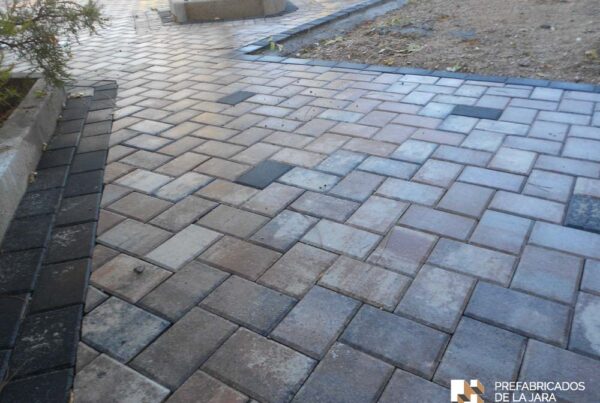
As its name indicates, it is the arrangement of pavers in a diagonal direction. Very similar to the herringbone formation. It is also applied at 45º to the direction of the road but with a more uniform and less interlaced arrangement. This technique not only adds visual dynamism to the pavement, but also improves the stability and distribution of weight on the surface, which is particularly beneficial in areas with heavy vehicular or pedestrian traffic.
Diagonal installation facilitates load handling and reduces uneven wear, which prolongs the life of the pavement. In addition, this pattern allows creative variations through the use of pavers of different colors or textures, thus offering the possibility of designing unique and aesthetically attractive spaces.
The diagonal arrangement is ideal for those projects that seek to combine functionality with an outstanding visual appeal, making each paved space a functional and durable work of art.
In blocks or parquet type
In this type of bonding pattern, the drawing imitates the design of a parquet floor, with groupings of two or three pavers around a central piece. They allow numerous design possibilities, in addition a design is created that resembles a mosaic. This style is not only visually appealing but also allows great flexibility in design, offering multiple possibilities to personalize spaces by varying the colors, textures and sizes of the pavers used.
This type of bonding pattern is particularly popular in areas where a significant aesthetic impact is sought, such as squares, patios, or pedestrian paths. In addition to its decorative value, the block pattern provides a robust and durable surface, suitable for supporting both pedestrian and vehicular traffic. Its ability to integrate different materials and colors allows designers and architects to experiment with creative designs, transforming functional pavements into key design elements in urban and residential projects.
Circular shapes
When making special designs for pavements that require it, the circular bonding pattern of rectangular pavers is very frequent, which requires alternating pavers placed on edge (lengthwise) with those placed on end (widthwise). This requires detailed planning and precise placement to maintain the uniformity and symmetry of the design.
This type of bonding pattern is ideal for highlighting specific areas, such as roundabouts, squares or entrances, and adds a visually striking element to the landscape. The circular arrangement not only has a high aesthetic value, but can also function as a visual guide for pedestrian and vehicular traffic, improving orientation and safety. In addition, it allows integrating different colors and textures of pavers, enriching the final design and offering the possibility of completely personalizing the space. Its complexity and beauty make the circular shapes pattern a preferred option for projects seeking a significant visual impact with added functionality.
The aesthetic possibilities of concrete pavers for pavements
Due to their adaptability to different geometries and drawings as well as the different advantages they offer, such as their durability, color permanence, economical maintenance, long service life, lConcrete pavers are an excellent option for use in pavements.
At Cleannox we have a wide catalog of pavers that allow mixing designs, colors and textures for a unique architectural effect. Paver models such as Uni, Uni Jara, Petreo, Praga or Picor allow original joints for pavements, combined with each other or with other different paver models.
Ask about our products and services of pavers for pavements in Albacete, Cuenca, Ciudad Real and Madrid. We work our products and services of pavers in Guadalajara and Toledo. Our experience of more than two decades, the works carried out in all this time and the satisfaction of our customers are the best reflection of the work of the technical and human team that is part of Cleannox.

Cleannox, adoquines de hormigón para pavimentos decorativos. Adoquines ecológicos con efecto fotocatalítico.